PESTLE & Five Forces
Scan the wider environment and the structure of your industry, then decide what it means for your strategy.
Where it fitsStage 1 of 7 · Diagnose: Where are we, and what is the real problem?
What it is
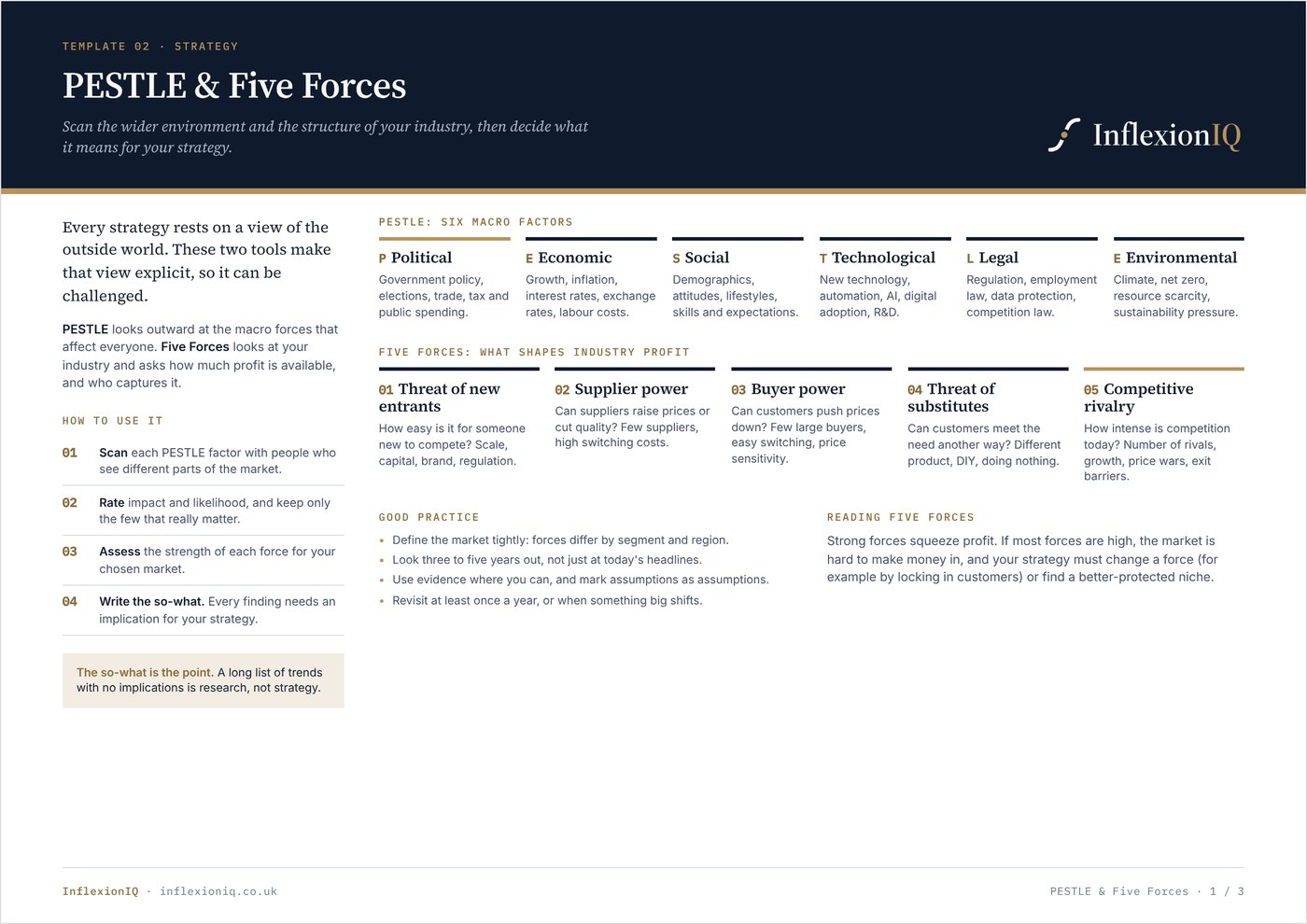
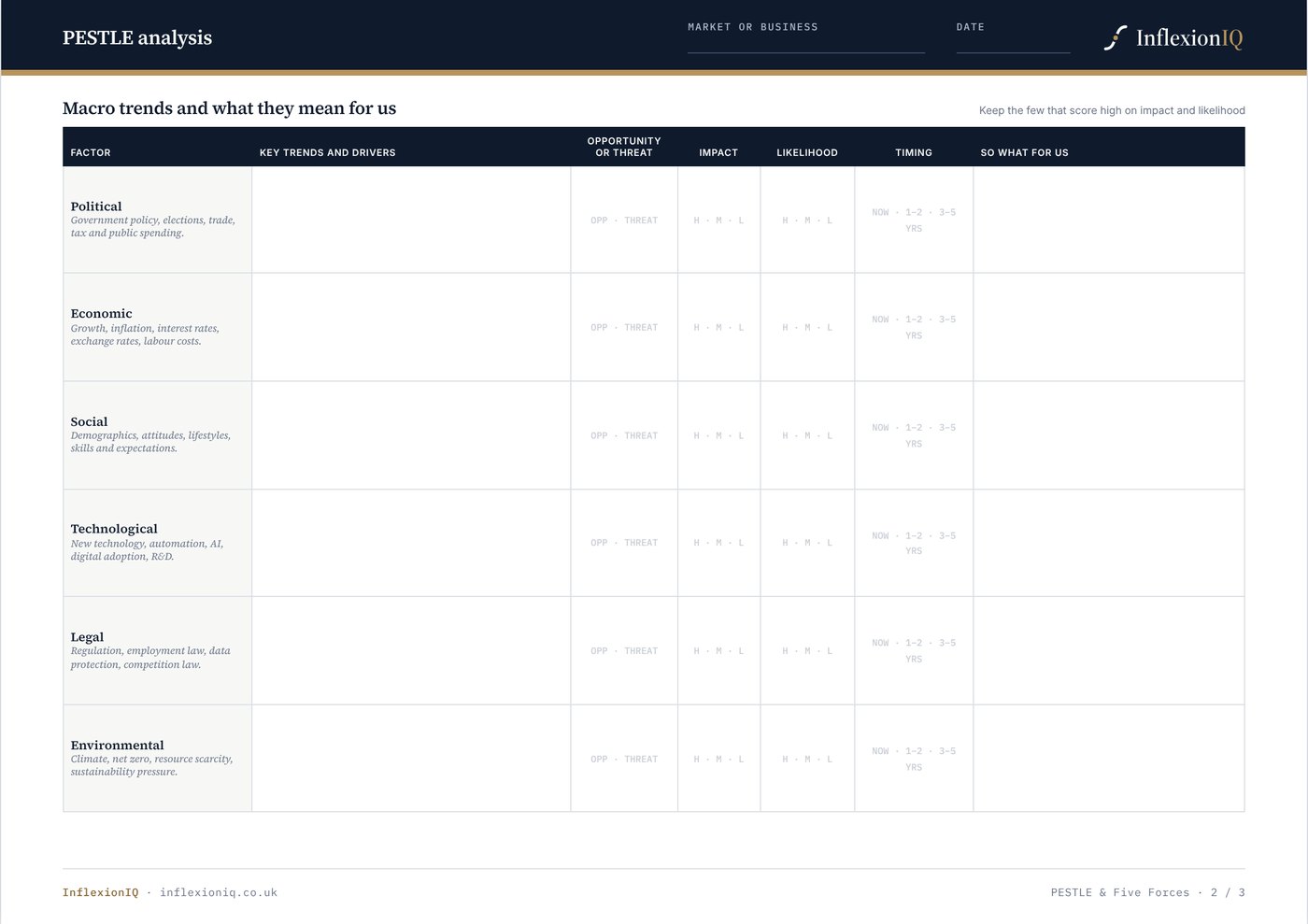
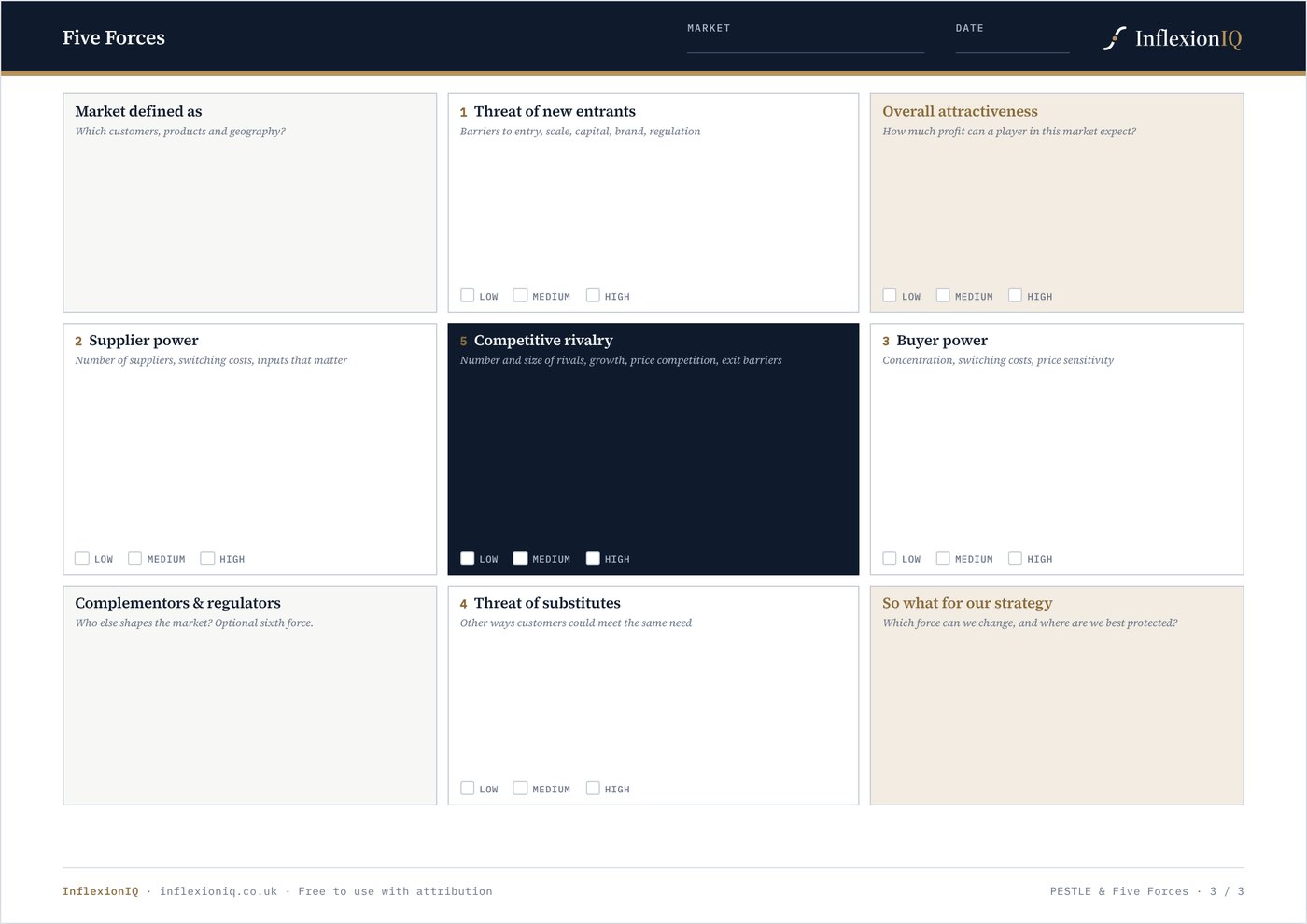
Two classic external analyses in one pack. The PESTLE page captures trends under six headings with impact and likelihood scores and a 'so what for us' column. The Five Forces page rates the strength of each competitive force and the overall attractiveness of the market. The Excel workbook scores everything and draws a Five Forces radar chart for you.
Why use it
Strategies are usually written from the inside out. A disciplined external scan shows which trends will shape demand, cost and regulation, and how much of the value in your industry you can realistically capture. Scoring each factor, rather than listing it, makes the team take a view on what matters most.
How to use it
- Define the market first: which customers, products and geography you are looking at.
- List the trends under each PESTLE heading, then score each one for impact and likelihood. Keep the handful that score high on both.
- Rate the five competitive forces as low, medium or high, with one line of evidence for each.
- Write the 'so what' for every factor you keep: is it an opportunity or a threat, and how soon will it bite?
- Carry the top three or four implications into your strategy work and your scenarios.
When it helps
- Preparing for a strategy refresh or annual planning
- Entering a new market, segment or geography
- Testing an investment case against external risks
- Briefing a new board or leadership team on the market
What is inside
- A guide to both tools and how to use them together
- A PESTLE grid with impact, likelihood, timing and 'so what' columns
- A Five Forces page with ratings and an overall attractiveness view
- An Excel scorer with an industry attractiveness radar chart
Worked example
Before deciding what to change, the executive team looked hard at what was happening outside the business.
| Economic | Interest rates stay higher for longer. Savers shop around, which squeezes margin. Impact high, likelihood high. |
|---|---|
| Legal | Consumer Duty raises the bar on fair value and customer outcomes. Impact high, likelihood certain. |
| Technological | AI and open banking let digital lenders decide in days, not weeks. Impact high, likelihood high. |
| Buyer power | High. Brokers place cases with whichever lender decides fastest and most reliably. |
| New entrants | Medium to high. Digital specialist lenders are growing quickly in the same niches. |
| So what for us | Speed and certainty for brokers is now the main battleground. Our underwriting expertise only counts if it is fast. |
What happened next. Speed became one of the two axes in the lender's scenario planning, and the theme of its strategy.
Preview
Questions
What is the difference between PESTLE and Five Forces?
PESTLE scans the wider environment: political, economic, social, technological, legal and environmental trends. Five Forces looks at the structure of your own industry: rivals, new entrants, substitutes, buyers and suppliers. Used together they show both the tide and the competition.
How do you stop a PESTLE becoming a long list?
Score each factor for impact and likelihood, keep only the few that matter, and write down what each one means for your strategy. The 'so what' matters more than the list.
Rate and review
How useful was this template?
Your rating and comments help me improve the template and decide what to build next. It takes less than a minute.
Thank you.
Your feedback has been sent. If you have got another minute, share the template with someone who'd find it useful.
More templates
All templates →
Problem Statement & Issue Tree
Pin down the real question, then break it into parts that are mutually exclusive and collectively exhaustive, so the analysis answers it. PowerPointPDFView and download →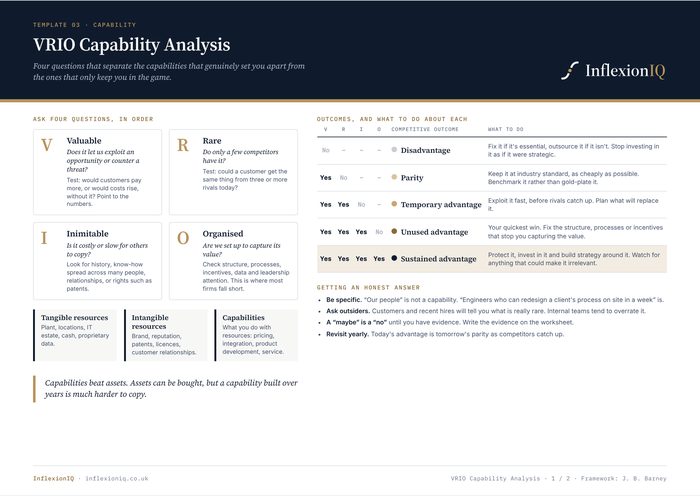
VRIO Capability Analysis
Four questions that separate the capabilities that set you apart from the ones that only keep you in the game. ExcelPDFView and download →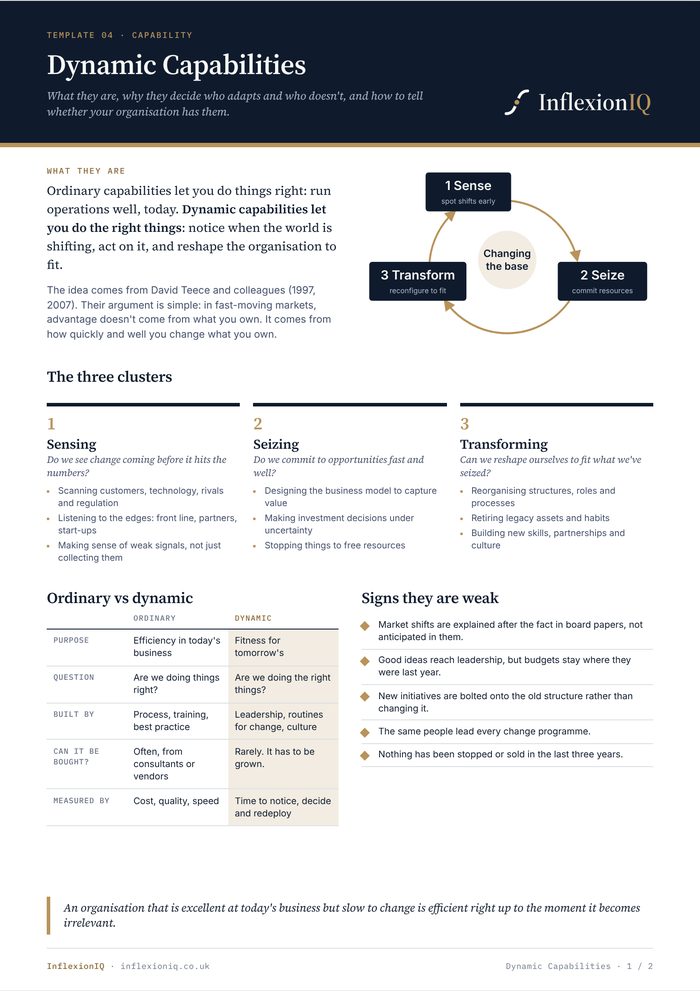
Dynamic Capabilities
What they are, why they decide who adapts and who does not, and a self-assessment to find out whether you have them. ExcelPDFView and download →Need something different? Request a template →