OKRs & Balanced Scorecard
Turn strategic priorities into measurable goals, with a balanced scorecard for the long view and OKRs for the next quarter.
Where it fitsStage 7 of 7 · Sustain: Did it work, and will it last?
What it is
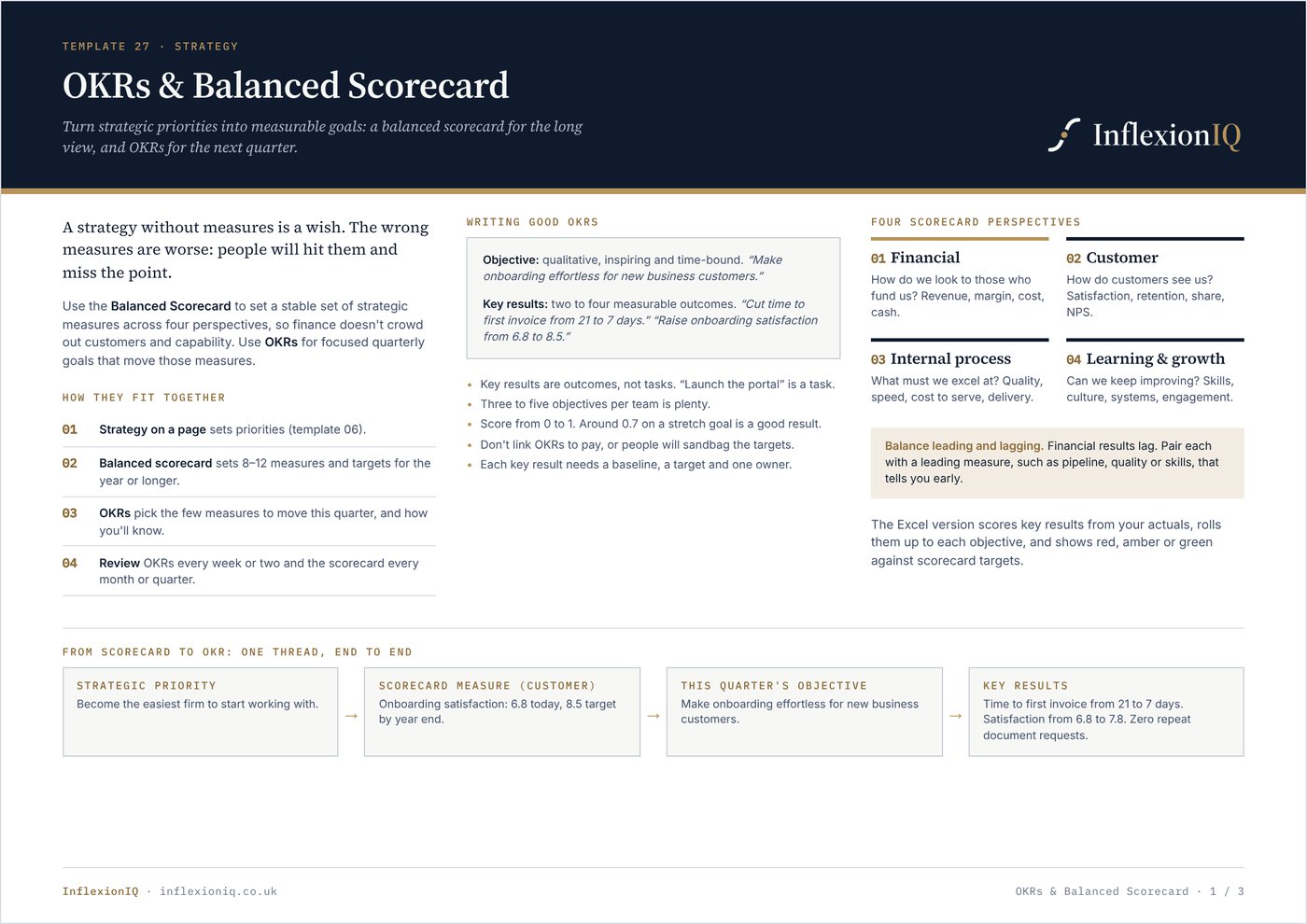
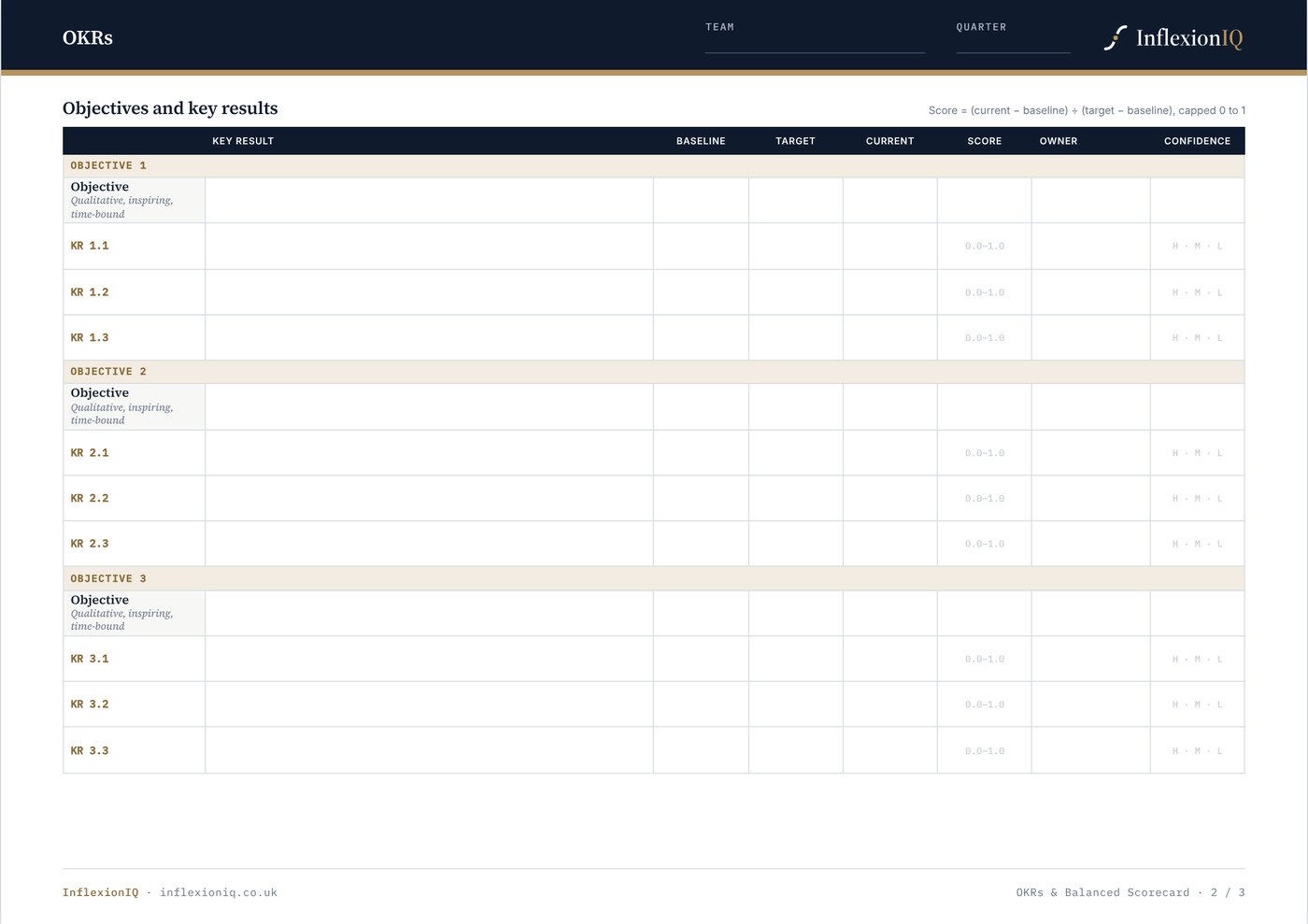
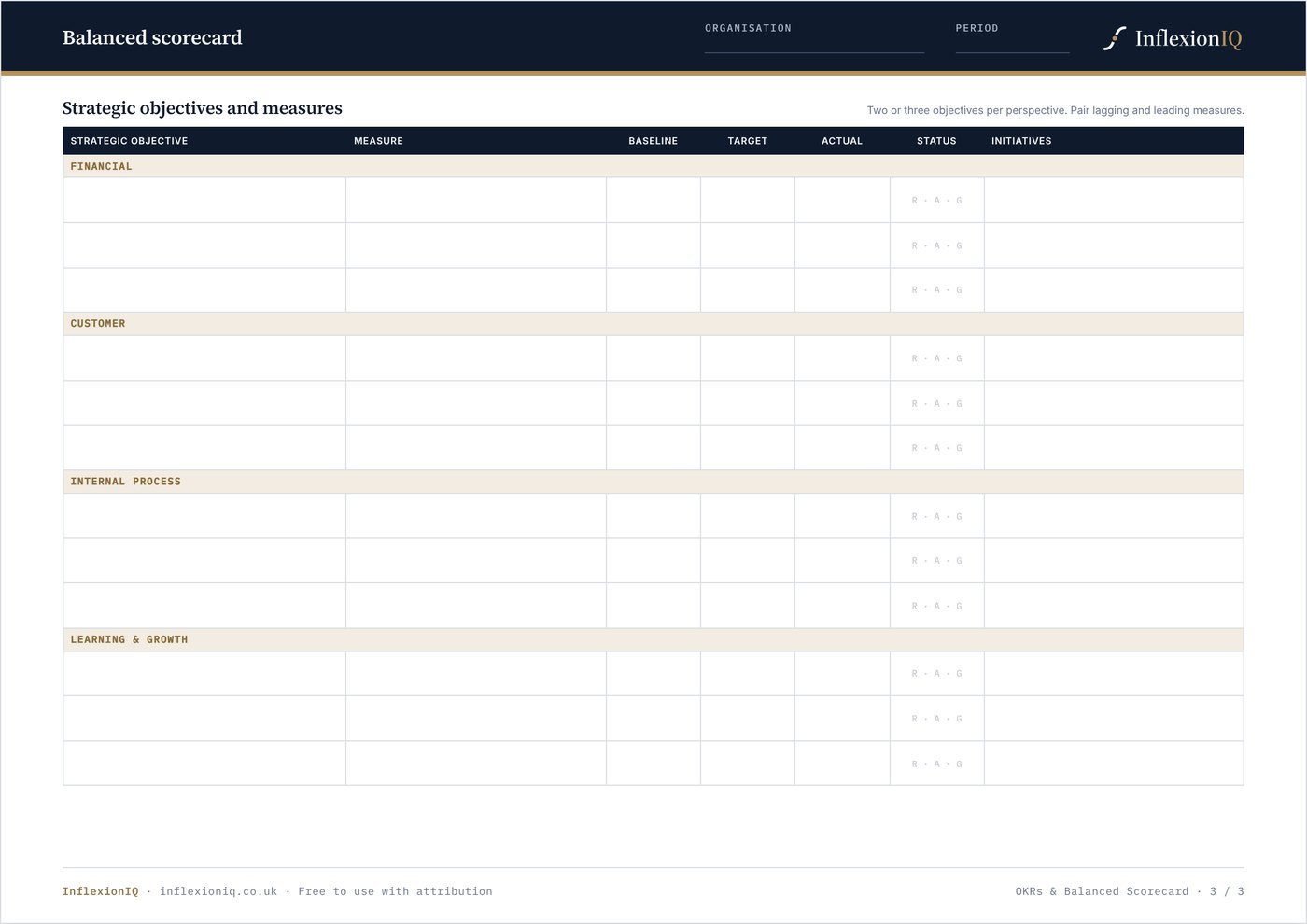
A measurement kit that links strategy to action. The balanced scorecard page sets objectives and measures across financial, customer, process and people perspectives. The OKR page sets quarterly objectives with key results and scores. The Excel workbook scores both and shows progress with RAG ratings.
Why use it
Strategies stall when nobody can say whether they are working. A balanced set of measures keeps the long view in sight, and quarterly OKRs turn it into stretching, visible goals that teams own.
How to use it
- Start with the balanced scorecard: two or three strategic objectives under each of the four perspectives, each with a measure, a baseline and a target.
- Pair lagging measures, such as margin, with leading ones, such as resale rates, so you see problems early.
- Each quarter, choose the few areas that need a step change and set OKRs for them: one inspiring objective and two to four measurable key results.
- Score key results from 0 to 1 in the Excel workbook. Around 0.7 is a good result for a stretching goal.
- Review the scorecard quarterly and reset OKRs at the start of each quarter.
Try it here
Enter a baseline, target and current value for each key result. Scores run from 0 to 1. Around 0.7 is a good result for a stretching goal. These are the lender's quarter 3 results.
Nothing you enter here leaves your browser. Download the template to keep your work.
When it helps
- Turning a new strategy into goals and measures
- Quarterly planning and reviews
- Replacing a long list of KPIs with a focused set
- Making sure a change is embedded in how performance is managed
What is inside
- A guide to both tools and how they fit together
- A balanced scorecard across four perspectives
- An OKR page with objectives, key results and scoring
- An Excel workbook with automatic scores and RAG ratings
Worked example
One objective from the quarterly OKRs, linked to the balanced scorecard.
| Objective | Become the fastest specialist lender brokers work with. |
|---|---|
| KR 1 | Average time to a decision from 11 days to 7. Reached 8. Score 0.75. |
| KR 2 | Share of cases submitted through the portal from 40% to 70%. Reached 64%. Score 0.8. |
| KR 3 | Broker satisfaction score from 6.8 to 8.0. Reached 7.4. Score 0.5. |
| Scorecard link | Supports the Customer perspective (broker satisfaction), the Process perspective (decision time) and the Financial perspective (cost-to-income). |
What happened next. Broker satisfaction lagged speed. Account managers started sharing each broker's own decision times every month.
Preview
Questions
Should I use OKRs or a balanced scorecard?
Both, for different jobs. The balanced scorecard tracks the health of the strategy over years across four perspectives. OKRs set a few stretching goals for the next quarter. The scorecard tells you where OKRs are needed.
How many OKRs should a team have?
Three objectives at most, each with two to four measurable key results. More than that and nothing is a priority.
Rate and review
How useful was this template?
Your rating and comments help me improve the template and decide what to build next. It takes less than a minute.
Thank you.
Your feedback has been sent. If you have got another minute, share the template with someone who'd find it useful.
More templates
All templates →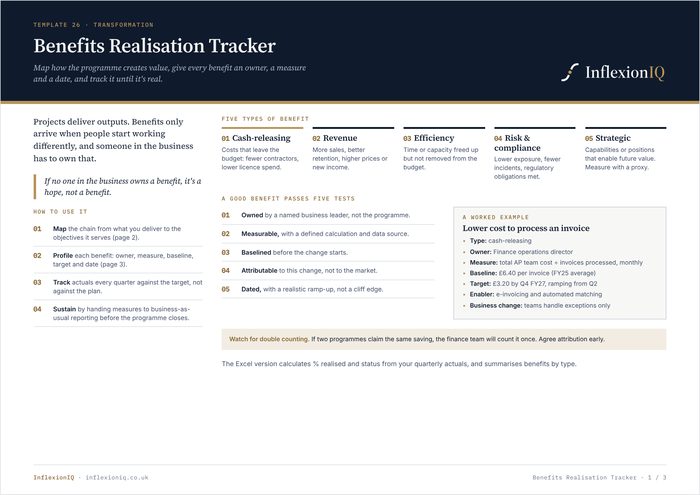
Benefits Realisation Tracker
Map how the programme creates value, give every benefit an owner, a measure and a date, and track it until it is real. PowerPointExcelPDFView and download →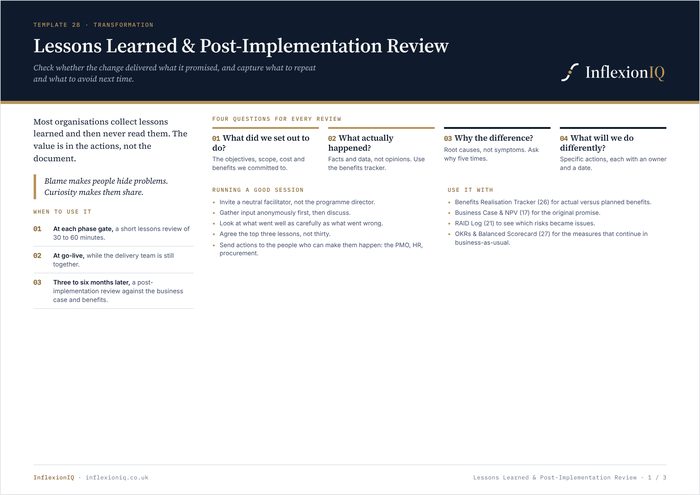
Lessons Learned & Post-Implementation Review
Check whether the change delivered what it promised, and capture what to repeat and what to avoid next time. PowerPointPDFView and download →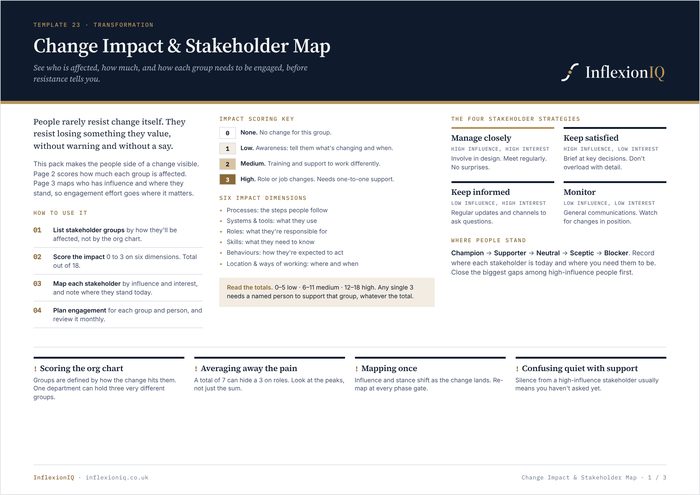
Change Impact & Stakeholder Map
See who is affected, how much, and how each group needs to be engaged, before resistance tells you. PowerPointExcelPDFView and download →Need something different? Request a template →