Scenario Planning Grid
Imagine four plausible futures, then find the moves that work in all of them and the signposts that tell you which is unfolding.
Where it fitsStage 2 of 7 · Strategise: Where are we going, and how will we win?
What it is
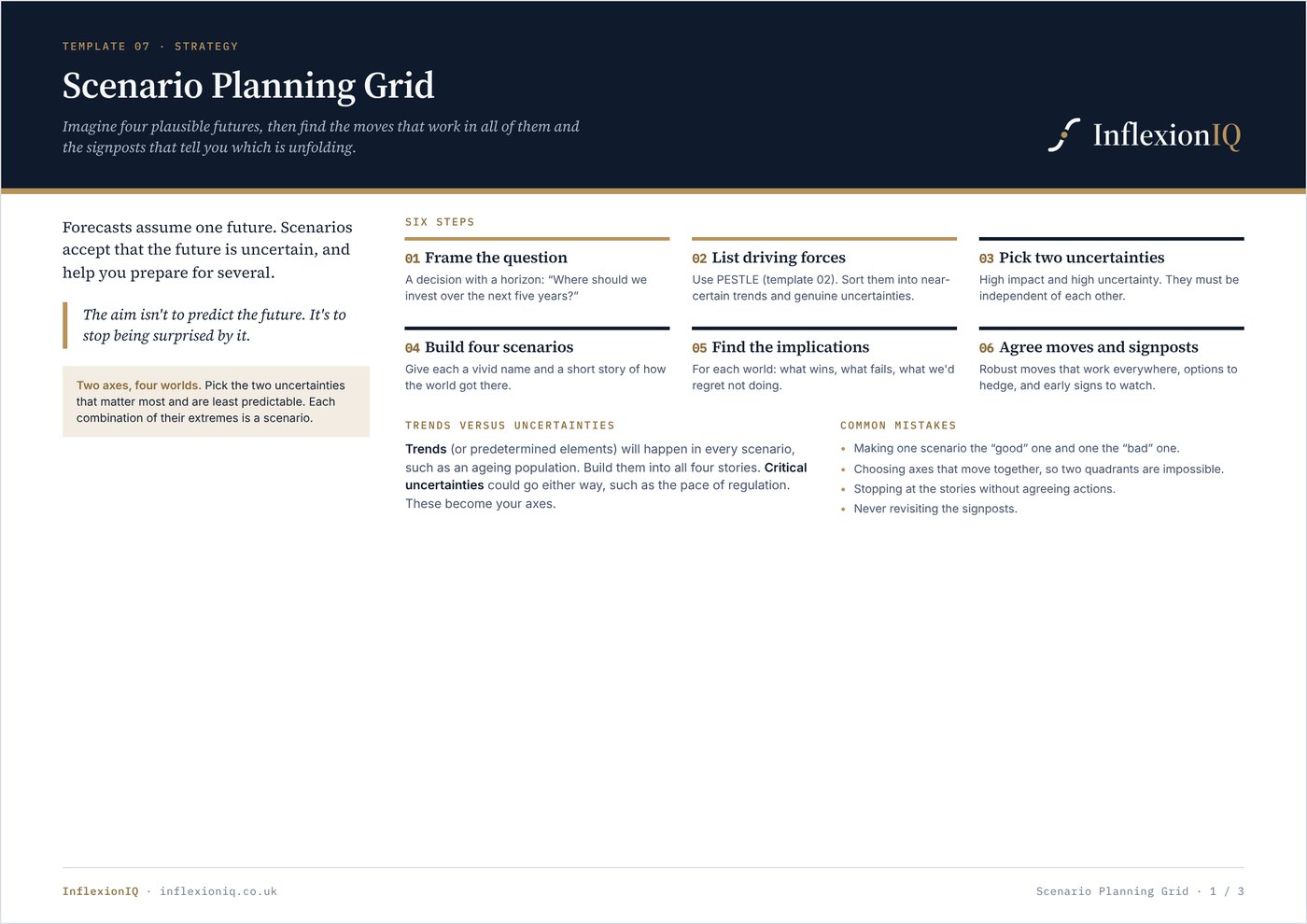
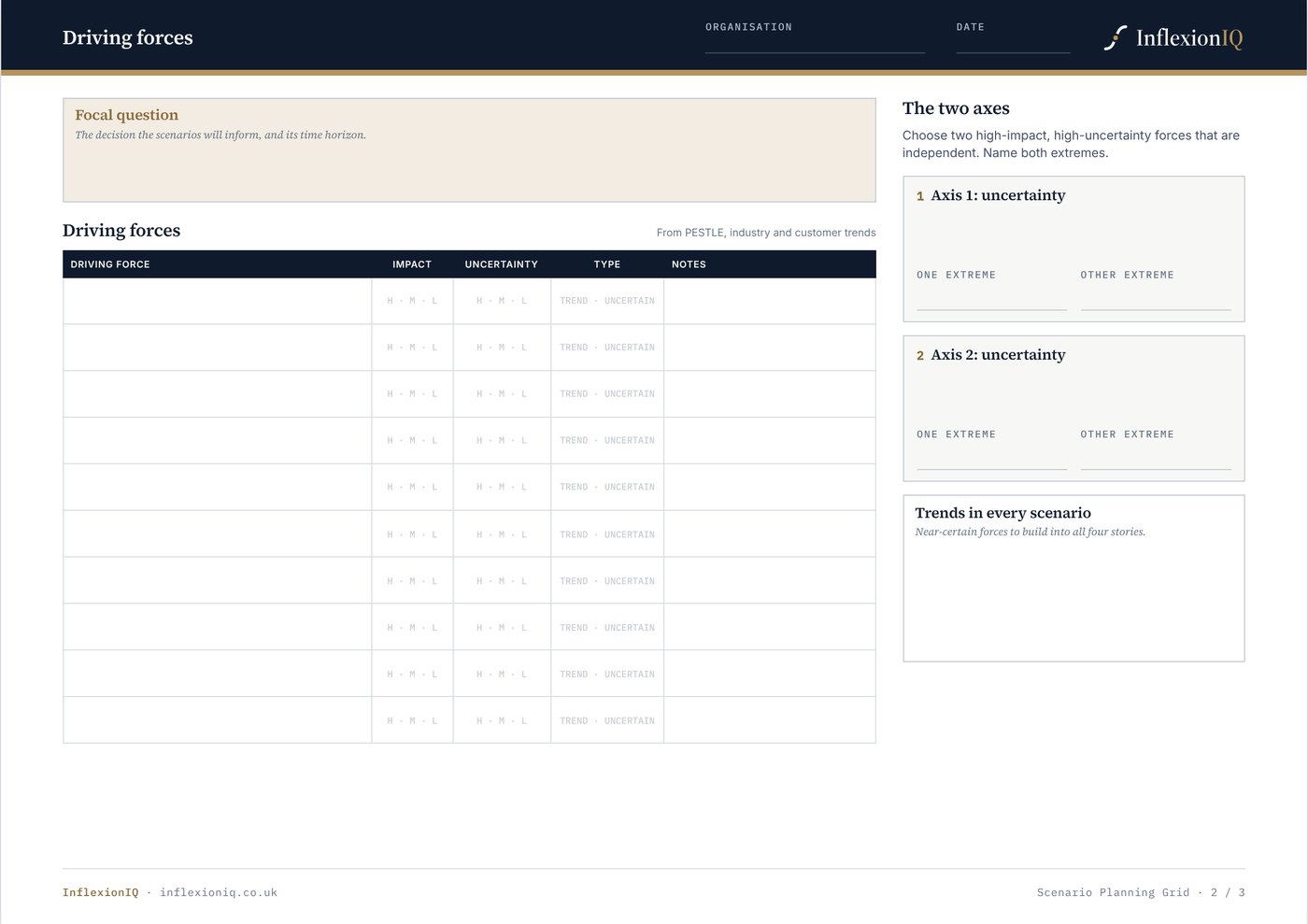
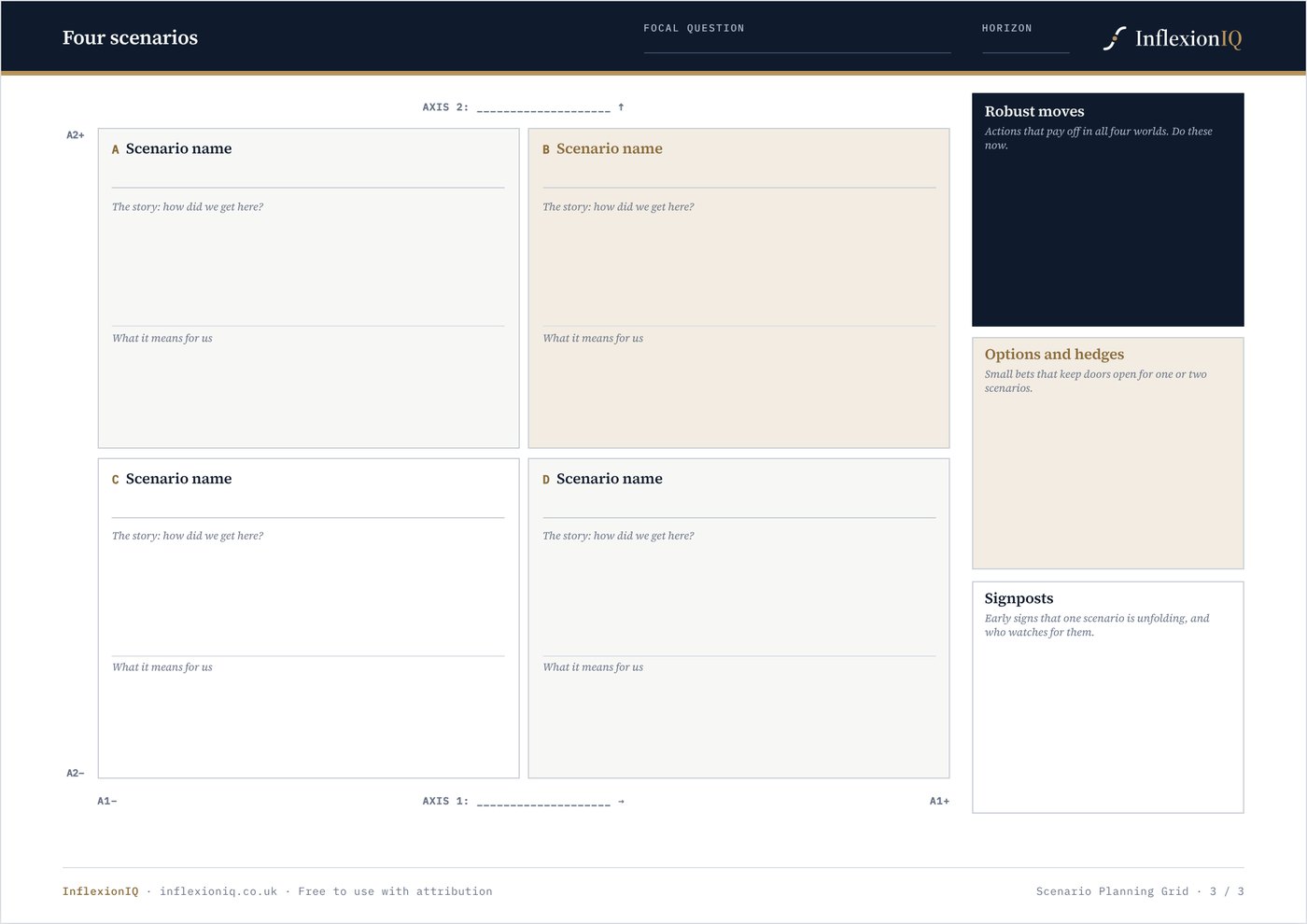
A scenario planning kit built around the classic 2x2. The guide walks through choosing two critical uncertainties and naming the four futures they create. A driving forces page sorts trends from true uncertainties and sets the two axes. The scenario grid holds a short story for each future, with robust moves, options and hedges, and the early signposts to watch.
Why use it
Forecasts give a single answer and are usually wrong. Scenarios help leaders prepare for several futures, spot the moves that are robust to all of them and avoid being surprised by the one nobody planned for.
How to use it
- Agree the focal question and the time horizon, for example 'Where should we invest over the next five years?'
- List the driving forces from your PESTLE work and sort them into near-certain trends and genuine uncertainties.
- Pick two uncertainties that have high impact and are independent of each other. They become the axes of the grid.
- Write a short, plausible story for each of the four futures and name each one memorably.
- Find the robust moves that work in all four, the options worth keeping open, and the signposts that would tell you which future is arriving.
When it helps
- Strategy work in an uncertain or fast-moving market
- Stress-testing a long-term investment or business case
- Board or leadership away days on the future of the business
- Preparing contingency plans for regulation, technology or demand shifts
What is inside
- A guide to choosing critical uncertainties and building scenarios
- A driving forces page to rate impact and uncertainty and pick the axes
- A 2x2 scenario grid with space for a story in each quadrant
- Robust moves, options and hedges, and signposts to monitor
Worked example
The two axes were interest rates (higher for longer, or falling) and how fast AI is adopted in lending (cautious and slow, or fast and widespread).
| A: Slow and squeezed | High rates, slow AI adoption. Margins stay tight and cost control matters most. |
|---|---|
| B: The speed race | High rates, fast AI adoption. Brokers move to whoever decides fastest. |
| C: Steady recovery | Falling rates, slow AI adoption. Volumes grow and service still wins. |
| D: Digital boom | Falling rates, fast AI adoption. Digital lenders scale quickly and take share. |
| Robust moves | Digitising the mortgage journey and AI-assisted document checks pay off in all four futures. |
| Signposts | FCA statements on AI, the share of broker cases decided within 5 days, and rate expectations. The strategy director reviews them quarterly. |
What happened next. Because speed mattered in three of the four futures, the board treated it as the core of the strategy, not an option.
Preview
Questions
How many scenarios should you build?
Four is usually right. Two critical uncertainties, each with two extreme outcomes, give a 2x2 grid of four distinct futures. Three tends to produce a 'middle' scenario everyone gravitates to.
What is a no-regret move?
An action that pays off in every scenario, sometimes called a robust move. You can make these now with confidence, while the signposts tell you when to commit to bigger, scenario-specific bets.
Rate and review
How useful was this template?
Your rating and comments help me improve the template and decide what to build next. It takes less than a minute.
Thank you.
Your feedback has been sent. If you have got another minute, share the template with someone who'd find it useful.
More templates
All templates →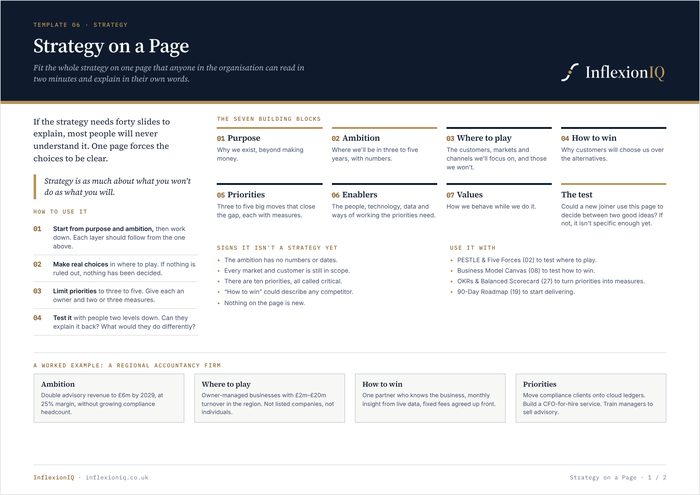
Strategy on a Page
Fit the whole strategy on one page that anyone in the organisation can read in two minutes and explain in their own words. PowerPointPDFView and download →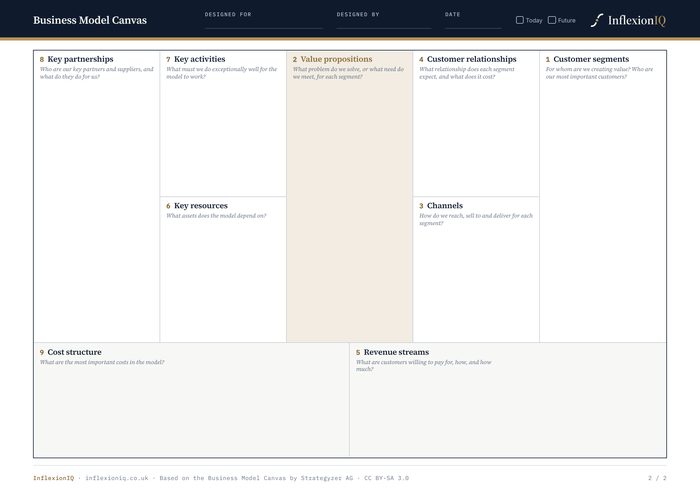
Business Model Canvas
Nine building blocks that show how an organisation creates, delivers and captures value, on a single page. PowerPointPDFView and download →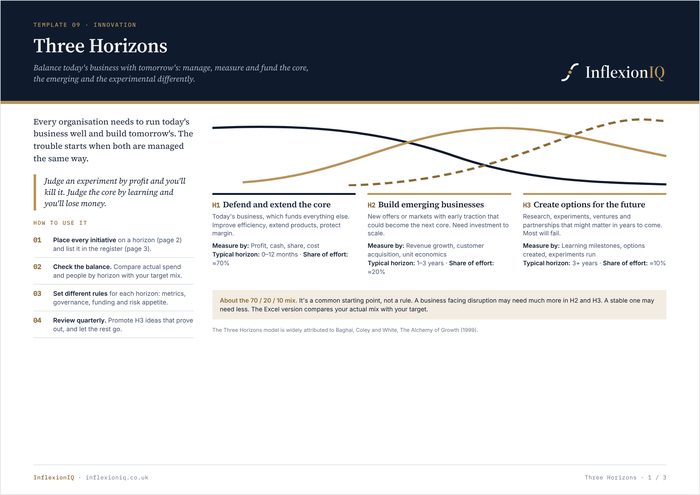
Three Horizons
Balance today's business with tomorrow's, and manage, measure and fund the core, the emerging and the experimental differently. PowerPointExcelPDFView and download →Need something different? Request a template →