Twenty minutes a day: how I built my 12-week plan
You do not need a sabbatical to keep up. You need a small target for each weekday and one real task each week.
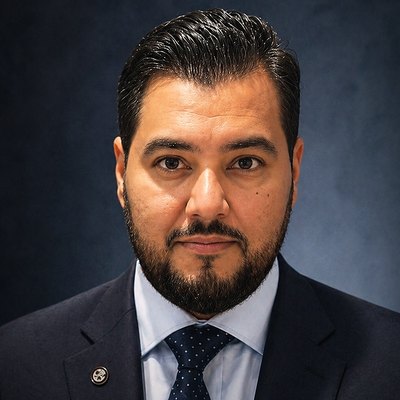 Mayank Paliwal
20 Nov 2026
Twenty minutes a day sounds easy. Then Tuesday arrives, the diary fills up, and the article you meant to read is still sitting in a tab on Friday.
I had tried the big approach before. A long course, a pile of books, good intentions. It never survived a busy month. So this time I designed the plan around the one thing I could not change: I am busy, and I will stay busy.
Small beats ambitious
The plan gives each weekday one small target. I watch or read something on Monday. I listen to a podcast on Tuesday, usually on the way to somewhere else. On Wednesday I look at the same idea from a second angle. On Thursday I apply it to my own work, often with one of my templates. On Friday I write down one thing I took from the week.
That is it. Most days it takes about twenty minutes. When I have more time, I go a little deeper.
A plan that fits a quiet week is a wish. A plan that survives a busy week is a habit.
Three phases, twelve weeks
I split the twelve weeks into three blocks of four:
- Understand. Weeks 1 to 4 are about the ideas and the language, so I can follow the conversation.
- Apply. Weeks 5 to 8 are about using it on real work, where the theory gets tested.
- Show value. Weeks 9 to 12 are about producing something I can share, so the learning turns into a result.
Credible and free
Every resource in the plan is free and comes from a source I would trust in a boardroom: the big consulting firms’ research, public guidance, university courses and well-known podcasts. I have left out anything behind a paywall, because I want anyone to be able to follow it.
Try this
Block twenty minutes in your diary for next Monday morning.Pick one skill, build the plan, and add the calendar file so each day's target is already waiting for you.Build my free 12-week plan →If this was useful, please pass it on.
Mayank works on business transformation, strategy and operating model design. He is an independent consultant and founder of InflexionIQ, previously at Deloitte, with a master's in Strategy & Innovation from Saïd Business School, University of Oxford.